In September 2016, Paula told us she was ready for a change. At 5’3 her weight peaked at 262 pounds and had a series of weight related health issues. Paula gave dieting and exercise multiple tries, hoping to lose the weight. Since her LAP-BAND placement, Paula has achieved a weight loss of 57 pounds! Her commitment and dedication has given her more time with her family, more energy, and more reasons to smile! […]
Category: Keith McEwen MD

Fear of Failure.
One of the biggest road blocks for those struggling with obesity, or anyone working on their weight, is fear. Fear of failure. Fear of disappointment. Fear of health issues. Fear of being judged by others, society, and a loved one. Fear of admitting your weight is a bigger issue to you than you’ve ever let on. Fear of having no other option and being stuck in this body that doesn’t feel like yours anymore. Fear of bariatric surgery.
We understand that fear. We understand that breaking out of comfortable but unhealthy cycle of habits can be hard. We know overcoming your fears will take time and dedication as well as commitment. We also know it takes a strong support system, and we understand that fear pushes everything aside and alienates us from anything or anyone that’s trying to help.
Fear is a huge factor that keeps potential patients from taking the first step in tackling their weight issues. How can Dr. McEwen and his team help with fear? Where do these fears come from? Why do potential LAP-BAND patients have these fears? Below are a few steps to take in overcoming your fears: […]

Transformation Tuesday: Amber (An update)
You’ve met Amber before. At the begging of 2017 we gave you peek into her LAP-BAND journey and today, Amber takes the time to share a piece of her personal knowledge and advice on her LAP-BAND system. With Dr. McEwen and his team, Amber can proudly say she’s lost 77 pounds and happily continues to work hard towards her goals! […]

LAP-BAND Surgery, a Possible Treatment for Diabetes.
It is important for us to clarify that lap band surgery will not cure your diabetes. Bariatric surgery does have the power to greatly improve your blood sugar levels and overall numbers. Improvements in blood sugar levels makes it possible for you to decrease your dependence on diabetes-related medications. While bariatric surgery is not an exclusive diabetes treatment there is a direct correlation with weight loss surgery and improvements in diabetes health issues.
LAP-BAND surgery can make a difference; patients could use less medication or none at all for TYPE 2 Diabetes or Insulin Resistance. Type I diabetes could see improvements with weight loss but Type I diabetics will always need therapy. […]

Transformation Tuesday: Debra
It’s been almost a year since Debra walked in our office. Like many of us, she was uncertain of what the LAP-BAND would do for her. Her attempts at dieting and exercising, left her disappointed. She was ready for a change. On July 2016, Debra came in ready shift her mindset and achieve her weight loss dreams. Today, she shares a piece of her LAP-BAMD journey! Congratulations Debra! […]

Transformation Tuesday: Meet Gwen
One of ours biggest rewards is witnessing the emotional changes our patients go through during their LAP-BAND journey. Meet Gwen. She came to us with a story many can relate to: low self-esteem and with no other desirable weight loss options. Since starting her journey in 2013, Gwen has lost a total of 82 pounds. She has blossom into the person she always knew she was and can happily share her a piece of her journey and some advice. […]
What Are LAP-BAND Adjustments & Why Do We Perform Them?
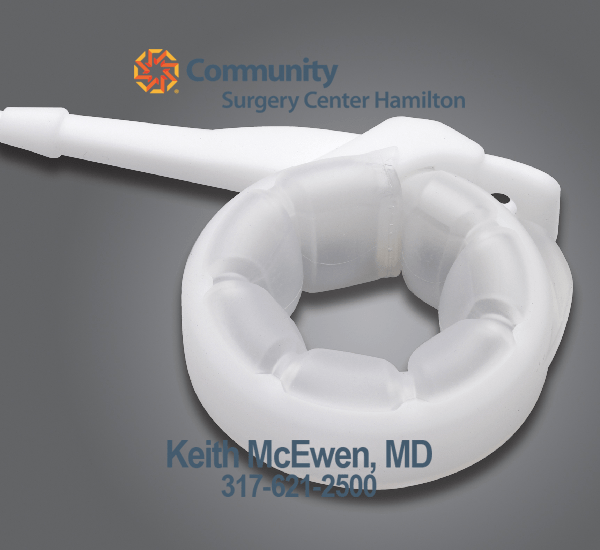
A LAP-BAND adjustment is an in-office procedure. Doctor McEwen uses a specialized needle to insert into your LAP-BAND port to inject sterile saline. The saline can fill the band’s inner pockets to tighten the band, or remove saline to loosen it.
Adding fluid to the band tightens the stoma (opening) into the lower stomach. The fluid makes the opening to your LAP-BAND pouch smaller, making it harder for food to pass through while helping you to feel full quicker. This added restriction means you need to pay closer attention to your food eat, speed at which you eat it, portion control and of course, what you are actually eating. […]
Bariatric LAP-BAND Myths, Part 2
In part 2 of Bariatric LAP-BAND® myths, we’ll address the post-op and patient-driven myths that surround lap band surgery. Every case varies and different variables can affect patients in different ways so no 2 people have the exact same experience. The following myths are general concepts we’ve experienced in our practice. If you or anyone you know has more questions, consider attending our FREE info seminar or email Cheryl Conwell at cconwell@ecommunity.com.
Bariatric LAP-BAND Myths, Part 1
Thanks to wonderful power of the internet, anyone can sound like an expert of any particular topic. The internet can provide some great and reliable info sources but for every reliable source there are just as many, if not more, sources that have little to no credibility. It seems we often find ourselves letting myths or negative experiences scare us from making the right decision for ourselves. Often, these myths will take a partial truth and blend them with an individual’s negative experience. These sources are largely based on emotion and not fact. Dr. McEwen has an extensive amount of experience in bariatric surgery with over 11 years exclusively in LAP-BAND® procedures and his experience can help address current myths often found while browsing the internet. In this two part blog, we’ll address surgical myths in part 1 and patient myths in part 2.

Possible LAP-BAND® Surgery Complications.
Surgery has a tendency to be scary, yes, nerves rattle thinking about it, planning for it, and living through the recovery time. We fear complications. Like other surgical procedure, invasive or not, the LAP-BAND surgery has minimal complications compared to other gastric surgery (bypass or sleeve). Currently, the ‘trendy’ weight loss surgery is the gastric sleeve (it removes 80% of stomach). The gastric sleeve is being marketed as minimally invasive. However it has complications comparable to all weight loss procedures.

 Weight Loss Solutions